|
|
|
You can get e-magazine links on WhatsApp. Click here
|
|
|
|
|
|
Cost factor for protein-rich processed foods needs to be managed
|
|
Saturday, 04 April, 2026, 08 : 00 AM [IST]
|
|
Dr Rita Patil
|
Food processing is known to us since ancient times. Earlier food processing was simple with methods like salting, fermentation, pickling and smoking. These probably were some of the first processing techniques. Later came in pasteurisation, canning and refrigeration. Refrigeration helped store more food and for longer durations. It also helped hold perishable food till it could be used. As technological advancements came in there was a revolution in the food processing industry. Innovations such as vacuum sealing, high-pressure processing and other methods evolved.
Gradually, the food processing techniques have emerged with innovations. High-intensity processing was initiated and modifications using ingredients as well as focus on nutrient contents began. This led to high amounts of sugar, salt and fat being used causing processed foods to be higher in energy content and reducing the micronutrient density.
Protein is an essential nutrient, made up of smaller units’ amino acids. The primary functions of proteins are bodybuilding, repairing tissues, help immune functions, and synthesise enzymes and hormones in the body. We get proteins in many different plant and animal foods. The sources of animal proteins are meat, fish, eggs and dairy products. The plant proteins are in peas, beans, lentils, nuts, seeds and whole grains. With the importance of proteins known and the need to include them in each meal is needed, a lot of protein food products are now available.
When proteins are cooked, the heat alters their structure. Some of the changes that happen are-
- Denaturation: Proteins lose their natural structure. This is called denaturation. Denaturation also makes proteins easier to digest. It improves the bioavailability of amino acids for body functions. Cooking chicken or beans releases amino acids and make them easy to absorb. Therefore, cooked food is easier to digest and absorb.
- Coagulation: After denaturation, proteins coagulate. The proteins start to thicken in the process of coagulation. They form a firmer structure by getting together. Coagulation is irreversible, the proteins cannot be turned back into their liquid form. Typically, this is seen in eggs when they are cooked. This process also happens when you cook meat. As the meat is heated, the proteins coagulate and shrink. When you heat milk to just below boiling point, a skin forms. This is due to the milk protein coagulating. Enzymes may also cause protein coagulation in cheese making.
- Loss of Soluble Proteins: Sometimes water-soluble proteins may leach into the cooking water and are lost.
Today, major transitions in processing influence and shape human nutrition. The purpose and of food processing has changed. The demand for convenient food is rising. While processed foods are convenient, the need to incorporate protein is understood and therefore processing of
protein foods is now top on the list of processed foods. Below are some of the protein food products that have been developed and may be obtained further.
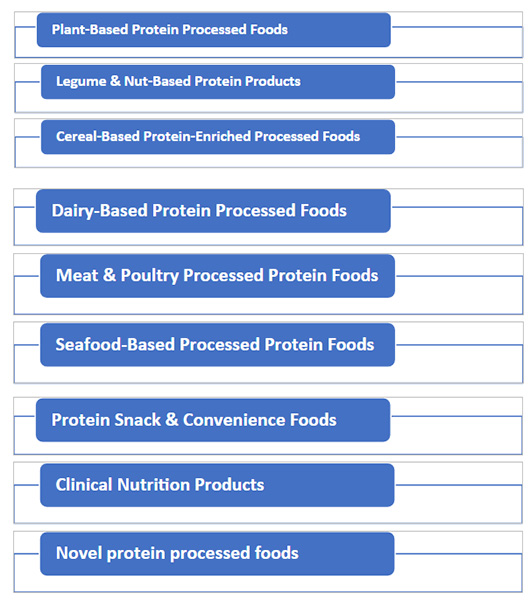 Dairy-Based Protein Processed Foods Dairy-Based Protein Processed Foods
- Whey protein powders
- Casein protein powders
- Yogurt fortified with several other foods and available in many a variety
- High-protein flavoured milks
- Processed cheese and cheese spreads
- Protein puddings and desserts
Meat & Poultry Processed Protein Foods- Sausages made of chicken and red meats
- Nuggets and patties made with chicken and meats
- Meat products like ham and salami
- Meat analogues- they are usually a blend of meat and plant protein
- Ready-to-eat foods and gravies that are fortified with protein foods
Seafood-Based Processed Protein Foods
- Fish fingers
- Canned fish- tuna, salmon etc.
- Fish protein concentrates
Plant-Based Protein Processed Foods
- Leaf protein extracts
- Textured vegetable protein
- Soy chunks and granules
- Tofu and tempeh
- Plant-based burgers and sausages
- Protein-enriched atta
- Protein-fortified rice
- Pasta made with chickpea or lentil
- Millet protein powders
Legume & Nut-Based Protein Products
- Peanut butter (protein-enhanced)
- Almond flour
- Roasted chana snacks
- Hummus
- Protein snack mixes
Cereal-Based Protein-Enriched Processed Foods
- High-protein breakfast cereals
- Oats fortified with Proteins
- Protein biscuits and cookies
- Protein breads, rolls and wraps
- Protein pancakes and premixes
Protein Snack & Convenience Foods
- Protein bars
- Energy bars that are protein-fortified
- Ready-to-drink protein shakes
- Protein chips, crackers
- Protein ice creams
- High-protein laddoos
- Indian traditional snacks that are modified to be protein-rich snacks
- Salted legumes, nuts, and seeds that are commonly used for snacks
Clinical Nutrition Products
- Oral nutrition supplements
- Diabetic protein formulations
- Geriatric protein supplements
- Sports nutrition supplements
- Enteral feeding formulas
Novel protein processed foods
- Fermented protein products
- Insect protein powders
- Lab-grown meat textured protein products
- Processed meats containing soy protein, modified starch etc., which may enhance the protein content
- Lab grown protein rich tofu and yogurt
- Flavoured protein bars and shakes that contain protein and other additives
- Ready-to-eat meals, usually are protein sources mixed with preservatives and flavour enhancers to improve palatability
Today, the food processing industry is a fast-growing sector. The developments are amazing and soon the focus will be towards needs of human nutrition. While protein-rich processed foods are being made, these should be available to all. The cost factor needs to be managed well in order to make the protein-rich foods reach all. Apart from new products being developed, traditional food such as legumes and pulses can be explored further for processing and this will be extremely useful. The consumption of pulses, legumes and other protein foods are lower than the requirements as meals are increasingly displaced by processed food. Therefore, we need to bring them to be in the processed and consumer-friendly packaging in order to increase the consumption. In conclusion, cook smart. Employ appropriate cooking methods that can help maximise the protein content of your meals. It is necessary to be mindful of how you prepare your food in order to obtain delicious, nutritious dishes that supply your body with the adequate amount of protein. (The author is area advisory board member, School of Sciences, Pimpri Chinchwad University,and jt secy, IDA, Mumbai chapter)
|
|
|
|
|
|
|
|
|
|