The HoReCa sector—Hotels, Restaurants, and Cafés/Catering—stands as one of the most dynamic pillars of the global service economy. Closely interwoven with tourism, lifestyle, culture, and employment, the industry mirrors social evolution more closely than almost any other sector. From luxury hotels and fine-dining restaurants to neighbourhood cafés and large-scale catering services, HoReCa reflects how people travel, eat, socialise, and celebrate.
After enduring one of the most turbulent phases in its history during the Covid-19 pandemic, the HoReCa sector has emerged transformed. Rather than merely recovering, it is reinventing itself—adopting new technologies, reshaping service models, and aligning with shifting consumer values such as sustainability, wellness, and personalisation.
As global mobility rebounds and consumer confidence strengthens, the future prospects of the HoReCa sector appear promising, though not without challenges. This article explores the growth outlook, emerging trends, technological disruption, sustainability imperatives, workforce evolution, and strategic directions that will define the next decade of hospitality.
The HoReCa Sector Today: A Snapshot
The HoReCa industry is among the world’s largest employers, contributing over 10% of global jobs either directly or indirectly. It serves as a critical driver of economic activity, particularly in tourism-dependent regions.
Key Characteristics of the Current Landscape
- Rapid revival of domestic and regional tourism
- Strong growth in food delivery and takeaway services
- Increased focus on health, hygiene, and safety
- Digitally empowered customers demanding speed and convenience
- Expansion of mid-scale and budget hospitality segments
The sector has learned valuable lessons from recent disruptions, leading to operational resilience and customer-centric innovation.
Market Outlook: A Sector on the Rise
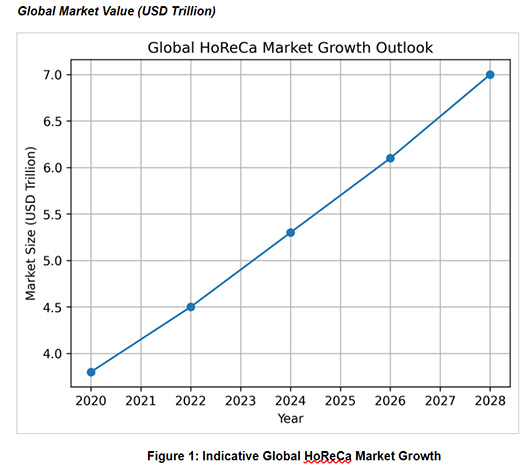
Despite recent setbacks, the HoReCa market is projected to experience steady long-term growth. Rising disposable incomes, urban lifestyles, international tourism recovery, and demand for experiential services continue to fuel expansion.
Key Forces Shaping the Future of HoReCa
1. Digital Transformation: From Support Tool to Strategic Core
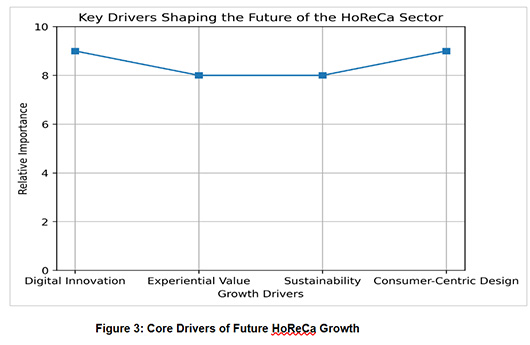
Technology is now the backbone of modern hospitality. Digital solutions enhance efficiency, reduce costs, and significantly improve customer experience.
Major Digital Trends
- QR-based menus and contactless ordering
- AI-driven demand forecasting and pricing
- Mobile apps for loyalty and personalisation
- Smart hotel rooms and automated check-ins
- Cloud kitchens and virtual restaurant brands
Hotels and restaurants increasingly rely on data analytics to understand customer behaviour and optimise service delivery.
2. Experiential Hospitality: Selling Moments, Not Just MealsToday’s consumers prioritise experience over convenience. Dining out and traveling are viewed as opportunities for emotional connection and storytelling.
Experience-Driven Trends
- Themed restaurants and immersive interiors
- Chef-curated tasting menus
- Cultural and heritage-based hospitality
- Wellness tourism and mindful dining
- Experiential hospitality enhances brand recall and encourages repeat visits.
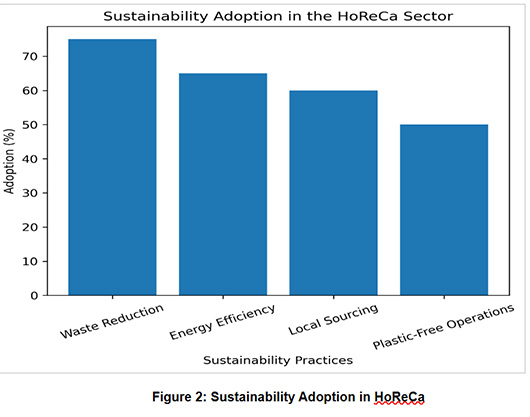
3. Sustainability: A Strategic ImperativeEnvironmental responsibility is no longer optional. Consumers actively favour brands that demonstrate sustainable practices.
Sustainability Initiatives in HoReCa- Zero-waste kitchens and composting
- Renewable energy use in hotels
- Local and ethical sourcing of ingredients
- Water and energy conservation systems
Sustainability improves brand reputation while reducing long-term operational costs.
Practices Adopted (%)
Changing Consumer Behaviour- The modern HoReCa consumer is:
- Digitally connected
- Health-conscious
- Environmentally aware
- Value-driven
- Emerging Preferences
Plant-based and functional foods
- Clean-label ingredients
- Customised dining experiences
- Flexible booking and cancellation policies
Meeting these expectations is key to long-term relevance.
Technology Reshaping Business Models
Table 1: Evolution of HoReCa Operations
Aspect
|
Traditional
Model
|
Future-Ready
Model
|
Ordering
|
Manual
|
App-based
/ AI-assisted
|
Payments
|
Cash/Card
|
Digital
& Contactless
|
Marketing
|
Offline
|
Data-driven
Digital
|
Kitchens
|
Physical
|
Cloud
& Hybrid
|
Feedback
|
Post-visit
|
Real-time
Analytics
|
Workforce Evolution: Skills for the FutureThe HoReCa sector remains people-centric. However, the nature of work is evolving.
Future Workforce Needs
- Digital and POS system proficiency
- Customer experience management
- Multilingual communication
- Sustainability compliance awareness
While automation reduces repetitive tasks, human interaction remains central to hospitality excellence.
Regional Growth Dynamics
Emerging MarketsAsia-Pacific, Latin America, and Africa offer immense growth potential due to:
- Expanding middle class
- Urbanisation
- Domestic tourism growth
Mature Markets
Growth will focus on:
- Premium experiences
- Boutique and lifestyle hotels
- Innovation-driven efficiency
Challenges That Lie AheadDespite strong prospects, the HoReCa sector faces challenges:
- Rising operational costs
- Skilled labour shortages
- Regulatory compliance
- Supply chain instability
- Intense competition
Success will depend on agility and strategic foresight.
Post-Pandemic Structural Shifts- Several changes are now permanent:
- Hybrid dining models (dine-in + delivery)
- Smaller, localised outlets
- Emphasis on hygiene transparency
- Flexible pricing and service formats
These shifts demand continuous innovation.
Future-Ready Business ModelsThe HoReCa sector is moving toward hybrid and diversified models, such as:
- Restaurants doubling as cloud kitchens
- Hotels integrating co-working spaces
- Cafés serving as community hubs
- Adaptability is the new competitive advantage.
Strategic Roadmap for Industry PlayerTo thrive in the future, HoReCa businesses should:
- Invest in smart technologies
- Embed sustainability into operations
- Focus on experience differentiation
- Upskill human resources
- Leverage data-driven insights
Conclusion: A Transformative Road Ahead for the HoReCa SectorThe HoReCa sector is entering a phase of renewed growth and strategic transformation. While recent global challenges disrupted traditional hospitality models, they also accelerated innovation, digital adoption, and operational flexibility across hotels, restaurants, and cafés. As a result, the industry is emerging stronger, more resilient, and better aligned with evolving consumer expectations.
Technology will continue to play a central role in shaping the future of the HoReCa sector, enabling efficient operations, personalised customer experiences, and data-driven decision-making. At the same time, the growing emphasis on sustainability and responsible practices reflects a fundamental shift in how hospitality businesses define long-term success. Establishments that integrate environmental stewardship and social responsibility into their core strategies are likely to gain lasting consumer trust and competitive advantage.
Changing consumer preferences toward experiential dining, wellness-focused travel, and value-driven services present new opportunities for differentiation. Alongside this, workforce development and skill enhancement will remain critical, as human interaction continues to define the essence of hospitality despite increasing automation.
Overall, the future prospects of the HoReCa sector appear promising. Businesses that embrace innovation, remain adaptable, and prioritise both experience and sustainability will be well positioned to thrive in an increasingly dynamic and competitive landscape.
(The author is assistant professor, Amity University Madhya Pradesh, Gwalior. He can be reached at wakram@gwa.amity.edu)