|
|
|
You can get e-magazine links on WhatsApp. Click here
|
|
|
|
|
|
Pkg tech - Innovations, sustainability and future of food protection
|
|
Saturday, 04 April, 2026, 08 : 00 AM [IST]
|
|
Dr K. Anitha
|
Global Overview of the Food Packaging Industry
Food packaging technology has evolved from a simple protective function to a highly sophisticated system that ensures food safety, extends shelf life, supports global trade, and addresses growing environmental concerns. With changing consumer preferences, rapid urbanisation, and advances in material science, food packaging has become a critical component of the modern food supply chain. Today, the industry stands at the intersection of innovation, sustainability, and public health. The global food packaging market has witnessed significant growth in recent years.
According to recent industry estimates, the market was valued at over US$400 billion in 2024 and is projected to exceed US$550 billion by 2032, growing at a compound annual growth rate (CAGR) of approximately 4–5%. This expansion is driven by increasing demand for processed and ready-to-eat foods, growth in e-commerce food delivery, and rising food safety regulations across countries. Asia-Pacific currently dominates the global market due to rapid population growth, changing dietary habits, and expanding food processing industries in countries such as India and China. Meanwhile, Europe and North America lead in technological innovation and sustainability-driven packaging solutions.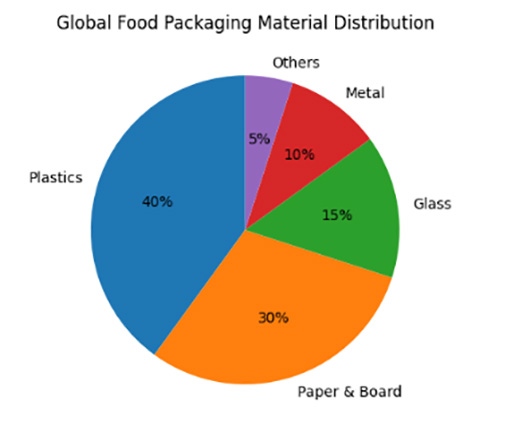
Primary Functions of Food Packaging
Food packaging serves multiple essential functions beyond containment. These include protection from physical damage, prevention of microbial contamination, barrier protection against moisture and oxygen, and facilitation of transportation and storage. Packaging also plays a key role in providing information through labelling, enhancing product appeal, and supporting traceability across the supply chain. Modern packaging systems are designed to maintain food quality while reducing food loss. It is estimated that nearly one-third of food produced globally is wasted, and improved packaging technologies can reduce post-harvest and retail losses by up to 20–25%.
Conventional Packaging Materials and Their Limitations
Traditional food packaging materials include plastics, glass, metals, and paper-based products. Plastics account for nearly 40% of food packaging materials worldwide due to their low cost, flexibility, and excellent barrier properties. However, their environmental persistence has raised serious concerns. Glass and metal packaging offer excellent protection and recyclability but are energy-intensive to produce and transport. Paper and cardboard are biodegradable but often require coatings or additives that compromise sustainability. These limitations have accelerated research into alternative materials and advanced packaging systems.
Smart Packaging Technologies
Smart packaging represents a major technological leap in food packaging. It integrates sensing, monitoring, and communication functions to enhance food safety and quality control. Smart packaging systems are broadly categorised into active packaging and intelligent packaging. Active packaging interacts directly with the food or its environment. Examples include oxygen scavengers, antimicrobial films, and moisture absorbers that help extend shelf life. Intelligent packaging, on the other hand, provides real-time information through indicators and sensors that monitor freshness, temperature, or gas composition. Recent studies suggest that smart packaging can extend shelf life by 30–50% for perishable foods such as meat, dairy, and seafood, significantly reducing food waste across supply chains.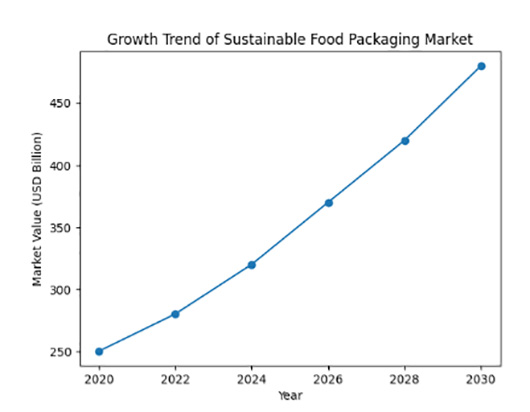
Biodegradable and Bio-Based Packaging Materials
Sustainability has become a central focus of food packaging technology. Biodegradable and bio-based materials derived from renewable sources such as starch, cellulose, chitosan, and polylactic acid (PLA) are gaining popularity. These materials reduce dependence on fossil fuels and minimise environmental pollution. The biodegradable packaging segment is growing at a CAGR of over 6%, driven by strict regulations on single-use plastics and increasing consumer awareness. However, challenges remain regarding mechanical strength, moisture resistance, and large-scale production costs. Recent innovations include multilayer biopolymer films and nanocomposites that improve barrier properties while maintaining biodegradability.
Role of Nanotechnology in Food Packaging
Nanotechnology has emerged as a transformative tool in food packaging. Nanomaterials such as Nano-clays, silver nanoparticles, and zinc oxide nanoparticles are used to enhance mechanical strength, antimicrobial activity, and gas barrier performance. Nano-enabled packaging can improve oxygen barrier properties by up to 40% and significantly reduce microbial growth. However, concerns regarding nanoparticle migration and long-term safety have led to increased regulatory scrutiny and ongoing toxicological research. Despite these concerns, nanotechnology continues to offer promising solutions for high-performance and functional food packaging.
Sustainable Packaging and Circular Economy
The concept of a circular economy has reshaped packaging design and waste management strategies. Sustainable packaging focuses on reducing material use, improving recyclability, and promoting reuse. Many multinational food companies have committed to making 100% of their packaging recyclable or reusable by 2030. Innovations such as mono-material packaging, lightweight designs, and refillable containers are gaining traction. Recycling technologies, including chemical recycling, are improving recovery rates for complex plastic materials. Globally, recycling rates for plastic packaging remain below 20%, highlighting the need for integrated technological and policy-driven solutions.
Digitalisation and Smart Labelling
Digital technologies are increasingly integrated into food packaging through QR codes, RFID tags, and block chain-enabled tracking systems. These tools enhance transparency, traceability, and consumer engagement. Smart labels allow consumers to access detailed product information, including origin, nutritional content, and storage instructions. From a supply chain perspective, digital packaging improves inventory management and reduces counterfeiting. The smart labelling market is expected to grow at a CAGR of over 10%, reflecting the rising demand for data-driven food systems.
Food Safety Regulations and Compliance
Food packaging technologies are closely regulated to ensure consumer safety. Regulatory agencies worldwide impose strict limits on material composition, migration of chemicals, and labelling accuracy. Compliance with food contact material regulations is essential for market approval. Harmonisation of international standards remains a challenge, particularly for emerging technologies such as nanomaterials and active packaging. Ongoing research and risk assessment are critical to balancing innovation with public health protection.
Future Trends in Food Packaging Technology
The future of food packaging technology lies in interdisciplinary innovation. Emerging trends include edible packaging, antimicrobial coatings derived from natural compounds, and AI-driven packaging design. Edible films made from proteins and polysaccharides offer potential applications for single-use food wraps. Personalised packaging, designed to meet specific dietary and lifestyle needs, is also gaining attention. As climate change and resource scarcity intensify, packaging solutions will increasingly prioritise efficiency, safety, and environmental responsibility.
Food packaging technology is undergoing rapid transformation driven by technological advancements, sustainability imperatives, and changing consumer expectations. From smart and active packaging to biodegradable materials and digital integration, modern packaging systems play a vital role in ensuring food security and reducing waste. As research continues to address current limitations, the future of food packaging promises innovative, sustainable, and intelligent solutions that support both global food systems and environmental health. Continued collaboration between scientists, industry stakeholders, and policymakers will be essential to realising this vision.
(The author is assistant professor, Department of Pharmacology, School of Pharmacy and Technology Management, SVKM's Narsee Monjee Institute of Management Studies Deemed-to-be-University, Shirpur)
|
|
|
|
|
|
|
|
|
|